Author: Wisdom Emori
Introduction
A guest may forget the colour of a hotel's walls or the design of its lobby, but they are unlikely to forget walking into a room that is dirty, poorly maintained or not properly prepared.
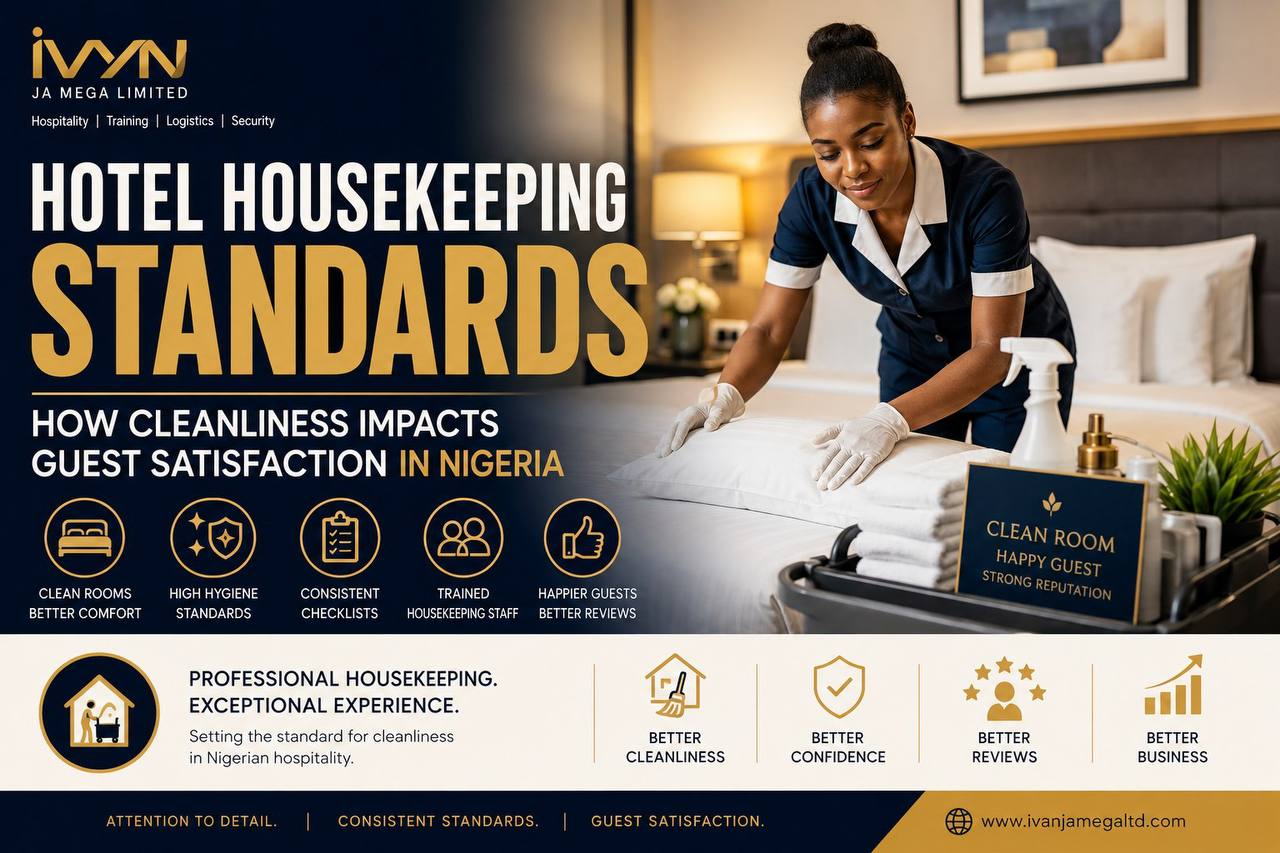
Cleanliness is one of the most visible parts of the hotel experience. It affects how guests perceive comfort, professionalism, hygiene and overall quality.
For this reason, hotel housekeeping should not be treated as simply cleaning rooms and changing bedsheets. It is a structured hospitality function that requires clear standards, trained employees, proper procedures, regular inspections and accountability.
For hotels in Nigeria, maintaining consistent housekeeping standards can be particularly important because guests have different expectations and properties compete on service, comfort, cleanliness, location, facilities and overall experience.
A professionally managed housekeeping operation helps ensure that every guest room and public area meets the hotel's expected standard before it is presented to a guest.
In this article, we examine the importance of hotel housekeeping standards, what they should cover, common mistakes hotels should avoid, and how proper training, SOPs and management can improve housekeeping performance.
What Are Hotel Housekeeping Standards?
Hotel housekeeping standards are the defined expectations and procedures used to maintain the cleanliness, appearance, hygiene and presentation of a hotel's rooms and other areas.
These standards provide employees with a clear understanding of what "clean" and "ready for a guest" actually mean.
Housekeeping standards can cover:
Guest bedrooms
Bathrooms
Bed linen
Towels
Floors
Furniture
Surfaces
Guest amenities
Waste bins
Public areas
Odour control
Room presentation
Cleaning equipment
Maintenance reporting
Without clearly defined standards, two employees may clean the same room differently.
One employee may consider a room ready because the bed has been made and the floor cleaned. Another may check the bathroom, mirrors, amenities, surfaces, odour, lighting and other details before considering the room ready.
Professional housekeeping removes that uncertainty.
Why Standards Matter More Than Individual Preference
A hotel should not depend entirely on an employee's personal definition of cleanliness.
Instead, management should establish a standard that employees can understand, follow and be assessed against.
This makes housekeeping more consistent across:
Different employees
Different shifts
Different room types
Different days
Different occupancy levels
The standard becomes the reference point for cleaning, inspection and accountability.
Why Cleanliness Is Critical to the Hotel Guest Experience
Cleanliness is closely connected to the way guests experience a hotel.
A guest entering a room expects it to look, smell and feel properly prepared.
First Impressions Begin With Cleanliness
The guest's first impression of a room can be influenced by details that may seem small to employees.
A poorly arranged bed, dusty surface, stained towel, dirty bathroom or unpleasant odour can immediately create a negative impression.
On the other hand, a clean and properly presented room communicates attention to detail.
Clean Rooms Build Guest Confidence
Guests are placing themselves in an environment they do not control.
They therefore need confidence that the room has been properly cleaned and prepared.
A consistent housekeeping standard can help communicate that the hotel takes cleanliness seriously.
Poor Housekeeping Can Damage the Guest Experience
Even when other aspects of a hotel are good, poor housekeeping can overshadow them.
A guest who encounters an unclean room may become dissatisfied with the entire property.
This is why housekeeping should be treated as an important part of the hotel's overall service delivery rather than an isolated back-of-house function.
Cleanliness and Online Reviews
Guests increasingly share their hotel experiences online.
Housekeeping problems can become part of a guest's public assessment of a hotel.
For hotel owners, this means cleanliness is not only an operational issue. It can also influence how potential customers perceive the property before making a booking.
Essential Hotel Room Housekeeping Standards
A professional housekeeping operation should have clear standards for every major part of the guest room.
Bedroom and Sleeping Area
The sleeping area should be properly prepared before a guest enters.
This includes:
Clean and properly presented bed linen
Properly arranged pillows
Clean and dust-free surfaces
Clean floors
Clean furniture
Properly positioned items
Clean curtains or blinds
Functional lighting
Appropriate room presentation
No unpleasant odour
Housekeeping staff should also look beyond the obvious.
Areas such as corners, underneath furniture and less frequently touched surfaces should not be ignored simply because they are not immediately visible.
Bathroom Standards
The bathroom requires particular attention because guests often use it as an immediate indicator of a hotel's cleanliness.
Housekeeping should check:
Toilet
Shower area
Sink
Mirrors
Tiles
Taps and fixtures
Towels
Toiletries
Waste bin
Floor
Drains
The bathroom should be clean, properly arranged and free from unpleasant smells.
Any maintenance problem discovered during cleaning should also be reported rather than ignored.
Guest Amenities
Guest amenities should be clean, properly arranged and replenished according to the hotel's established standard.
Depending on the property, these may include toiletries, towels, drinking water and other items provided for guests.
The important principle is consistency.
Guests should not have to wonder whether an item was forgotten simply because a different employee prepared the room.
Final Room Presentation
Cleaning is not complete simply because the physical cleaning tasks have been performed.
The room should be viewed as the guest will see it.
Is everything properly arranged?
Does the room look welcoming?
Are the amenities correctly positioned?
Are there visible marks, stains, dust or damage?
Are the lights and other basic facilities functioning?
This final perspective can help identify problems that may otherwise be overlooked.
Hotel Housekeeping Checklists and Room Inspections
One of the most effective ways to create consistency is to combine housekeeping procedures with inspection.
There is a difference between cleaning a room and confirming that the room meets the hotel's standard.
Why Every Room Should Be Inspected
An inspection provides an additional layer of quality control.
It can identify:
Missed cleaning areas
Missing amenities
Poor presentation
Damaged items
Maintenance problems
Linen issues
Odour problems
The inspection process should be practical and consistent rather than simply a formality.
What a Housekeeping Inspection Should Check
A room inspection can cover:
Bedroom
Bed presentation
Linen
Furniture
Surfaces
Floors
Curtains
Lighting
Amenities
Bathroom
Toilet
Shower
Sink
Mirror
Towels
Toiletries
Floor
Waste bin
General
Odour
Room temperature
Equipment
Visible damage
Overall presentation
Who Should Conduct the Inspection?
The exact structure can depend on the hotel's size and organization.
A supervisor or designated quality-control person can inspect completed rooms before they are released for occupancy.
The important point is that responsibility for quality should be clearly defined.
Documenting Housekeeping Issues
When an issue is identified, it should be communicated to the appropriate person.
For example, if a housekeeper discovers a leaking tap, faulty air conditioner or damaged furniture while cleaning, the issue should be reported to maintenance or management.
This creates a connection between housekeeping and facility management.
Common Hotel Housekeeping Mistakes
Some housekeeping problems are not caused by a lack of effort. They can result from poor procedures, inadequate training, weak supervision or workload pressures.
Common mistakes include:
Rushing Room Cleaning
When employees focus only on completing rooms quickly, details can be missed.
Speed matters in hotel operations, but it should not replace quality.
Inconsistent Bathroom Cleaning
Bathrooms require systematic attention. Cleaning only the most visible areas can leave problems unnoticed.
Forgetting Less Visible Areas
Dust and dirt can accumulate in corners, behind furniture and on surfaces that are not immediately noticeable.
Poor Linen Handling
Linen should be handled according to the hotel's established procedures to maintain cleanliness, organization and consistency.
Incomplete Replenishment
A room can be clean but still not properly prepared if required guest amenities have not been replenished.
Ignoring Odours
A room may look clean and still have an unpleasant smell.
Odour should therefore form part of the housekeeping inspection rather than being overlooked.
Failing to Report Maintenance Problems
Housekeeping employees are often in rooms more frequently than managers.
They may notice maintenance issues before anyone else.
Failing to report those problems can allow small issues to become bigger operational problems.
Not Inspecting Completed Rooms
A room should not automatically be considered ready simply because a housekeeper has completed the cleaning process.
Inspection provides an important quality-control step.
The Connection Between Housekeeping and Hotel SOPs
Housekeeping standards become more effective when they are supported by clear Standard Operating Procedures.
An SOP can explain how a task should be performed, in what sequence, what should be checked and what should happen when a problem is discovered.
For example, a housekeeping SOP can establish procedures for:
Room cleaning
Bathroom cleaning
Bed preparation
Linen handling
Amenities
Deep cleaning
Room inspection
Lost and found
Maintenance reporting
Room status communication
Our article, Hotel SOPs: Why Standard Operating Procedures Are Essential for Nigerian Hotels, explains why documented procedures are important for creating consistency across hotel operations.
However, an SOP should not simply sit in a manual.
Employees need to understand it, managers need to monitor its implementation, and procedures should be reviewed when operational requirements change.
Why Hotel Housekeeping Staff Need Proper Training
A housekeeping employee needs more than access to cleaning products and equipment.
Professional housekeeping requires knowledge, attention to detail, communication and an understanding of the hotel's standards.
Training can cover:
Cleaning procedures
Room preparation
Bathroom standards
Linen handling
Guest interaction
Safety procedures
Equipment use
Reporting maintenance issues
Inspection procedures
Workplace professionalism
Our article on Why Hotel Staff Training Matters for Guest Retention explains the broader importance of developing hotel employees.
Ivan JA Mega Limited also provides Five-Star Service Training, which includes practical hospitality training and Standard Operating Procedures for areas including housekeeping.
Training becomes even more effective when it is reinforced through supervision, feedback and regular performance monitoring.
Housekeeping and Hotel Maintenance
Housekeeping and maintenance should not operate as completely separate functions.
A housekeeper entering a room may discover:
A leaking tap
Faulty air conditioning
Broken light
Damaged furniture
Plumbing problems
Electrical issues
Water problems
Damaged fittings
If there is no clear reporting process, these issues may remain unresolved until a guest complains.
Professional hotel management should therefore establish a simple process for housekeeping employees to report facility problems.
This can improve communication between housekeeping, maintenance and management.
For properties where accommodation quality and facility maintenance are important parts of the guest experience, Ivan JA Mega Limited provides Hotel & Service Apartments services that include professional hotel management, guest relations and facility maintenance.
How Professional Management Improves Housekeeping Standards
Housekeeping performance does not happen by accident.
Management has an important role in creating the environment in which good housekeeping can consistently take place.
Setting Clear Standards
Employees need to know exactly what the hotel expects.
Training Employees
Staff need practical knowledge of how those standards should be achieved.
Inspecting Rooms
Management should have a process for checking whether standards are being met.
Monitoring Performance
Recurring housekeeping problems should be identified and addressed rather than treated as isolated incidents.
Coordinating Departments
Housekeeping, maintenance, front office and management should communicate effectively.
Creating Accountability
Employees should understand their responsibilities, while supervisors should have a clear responsibility for monitoring performance.
This is where professional hotel management becomes particularly valuable: it connects individual tasks to the wider operational goals of the property.
A Practical Hotel Housekeeping Checklist
Hotels can adapt their housekeeping checklist to their room types, facilities and operational requirements.
Guest Room
Bed properly made
Linen clean and properly presented
Pillows properly arranged
Surfaces dust-free
Floors clean
Furniture clean and properly positioned
Curtains or blinds checked
Lighting checked
Guest amenities replenished
Waste bin emptied
Room odour checked
Visible damage reported
Bathroom
Toilet cleaned
Sink cleaned
Shower area cleaned
Mirrors cleaned
Towels properly arranged
Toiletries replenished
Floor cleaned
Waste bin emptied
Drains checked
Fixtures checked
Final Inspection
Before the room is released to the guest:
No visible dirt
No unpleasant odour
No missing amenities
No obvious maintenance issue
Room properly arranged
Facilities checked
Overall presentation meets the hotel's standard
A checklist should support professional judgment rather than replace it. Staff and supervisors should still look at the room from the guest's perspective.
How Ivan JA Mega Limited Supports Hospitality Standards
Professional housekeeping is part of a larger hospitality operation.
Ivan JA Mega Limited supports hospitality businesses through services focused on hotel management, staff development, service standards and operational support.
Its Hotel & Service Apartments service includes professional hotel management, guest relations and facility maintenance.
The company's Five-Star Service Training provides hospitality teams with training covering service etiquette, technical hospitality skills, conflict resolution, leadership and management, as well as practical SOP development.
Where required, Logistics & Elite Protection provides related transportation, airport concierge and security solutions that can complement the guest experience.
The broader objective is to help hospitality businesses establish stronger systems, develop their people and deliver more consistent service.
Frequently Asked Questions
What are hotel housekeeping standards?
Hotel housekeeping standards are defined requirements for maintaining the cleanliness, hygiene, appearance and presentation of guest rooms and other hotel areas.
Why is housekeeping important in a hotel?
Housekeeping directly affects room cleanliness, guest comfort, presentation and the overall perception of the hotel.
What should a hotel housekeeping checklist include?
A checklist can include bed and linen presentation, surfaces, floors, bathrooms, amenities, waste bins, odour, room presentation and maintenance issues.
How often should hotel rooms be inspected?
Completed rooms should be inspected according to the hotel's operational procedures before being released to guests. The frequency and inspection structure can vary depending on the property's size and operating model.
Why does housekeeping staff training matter?
Training helps employees understand the hotel's standards, procedures, equipment and expectations. It can also improve consistency and accountability.
How do SOPs improve hotel housekeeping?
SOPs provide clear procedures for performing housekeeping tasks and help employees understand what needs to be done, how it should be done and what to do when problems are discovered.
Can professional hotel management improve housekeeping standards?
Yes. Professional management can establish standards, train staff, monitor performance, coordinate departments and create accountability around housekeeping operations.
Can Ivan JA Mega Limited support hotel housekeeping and hospitality operations?
Ivan JA Mega Limited provides hotel management, hospitality training, SOP development, guest relations and facility-maintenance support through its hospitality services.
Final Thoughts
Hotel housekeeping is not simply about cleaning.
It is about maintaining a standard that guests can see, experience and trust.
A beautifully designed hotel can still provide a poor experience if its rooms are not properly cleaned, its bathrooms are neglected, its linen is poorly presented or maintenance problems are ignored.
Professional housekeeping requires more than hard work. It requires:
Clear standards + trained staff + proper procedures + inspection + accountability.
When these elements work together, housekeeping becomes an important part of a hotel's overall service operation.
For Nigerian hotels and service apartments, investing in professional housekeeping standards can help create a cleaner, more consistent and more professional guest experience.
Cleanliness is not an extra feature of hospitality. It is part of the hospitality product itself.